
'The government is trying to kickstart the investment cycle in India and while the corporate investments are yet to gather momentum, there are early signs of the same.'
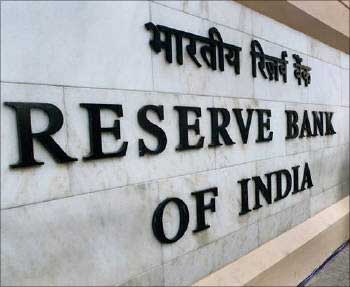
In policy review meet in June, RBI Governor Raghuram Rajan kept interest rates intact.
Higher for longer' may be the narrative in the developed markets, but interest rates might not stay high for very long in India, with a section of the market expecting rate cuts to begin this year. The six-member Monetary Policy Committee of Reserve Bank of India (RBI) decided to keep interest rates unchanged at 6.5 per cent in the April review - after hiking the policy repo rate in six previous meetings. RBI Governor Shaktikanta Das emphasised that the pause was only for the April policy and that the central bank was ready to act if the situation demanded.

From the Sensex pack, Reliance Industries fell the most by 2 per cent. Tata Steel, Bajaj Finserv, ITC, NTPC, Bharti Airtel, Tech Mahindra, Titan, Axis Bank and Bajaj Finance were among the other major laggards.

RBI targets to keep inflation at 4 per cent, (+/- 2 per cent), and its rise beyond this comfort zone will put pressure on the central bank to hike rates.

Traders said sustained offerings by stockists on the back of weak global trend, as investors weighed the outlook for the Fed's monetary policy after improving economic growth, mainly reduced demand for gold as an alternate investment.

Benchmark indices advanced for the second straight session on Tuesday, with the Sensex and Nifty jumping nearly 2 per cent each, mirroring a rally in global equity markets. Buying in index majors Reliance Industries and IT stocks buoyed the benchmarks. The BSE Sensex zoomed 934.23 points or 1.81 per cent to settle at 52,532.07. During the day, it rallied 1,201.56 points or 2.32 per cent to 52,799.40. The NSE Nifty climbed 288.65 points or 1.88 per cent to finish at 15,638.80.

The retail inflation, which is factored in by the RBI to arrive at its monetary policy, has been on decline since last month. The previous low was 5.54 per cent in November 2019. The government has asked the RBI to restrict the inflation around 4 per cent, with a margin of 2 per cent on the either side.

The number of high net worth individuals grew 20.4 per cent to 2.63 lakh people, while their collective wealth grew 21 per cent to over $1 trillion.
Financials emerged as the top gainers while auto shares rallied on robust September sales

The Financial Intelligence Unit-India (FIU-India), the national agency responsible for analysing suspicious financial transactions, has received requests from four more offshore crypto exchanges to operate in India again, said a senior government official familiar with the matter. In the beginning of 2024, India had banned nine crypto exchanges - Binance, Kucoin, Huobi, Kraken, Gate.io, Bitstamp, MEXC Global, Bittrex, and Bitfenix - for non-compliance with anti-laundering law in the country.
Retail inflation fell to a 15-month low of 5.66 per cent in March, mainly due to a decline in food prices, government data showed on Wednesday. The inflation figure in March is within the RBI's comfort zone as it is below 6 per cent. The retail inflation based on Consumer Price Index (CPI) was 6.44 per cent in February 2023 and 6.95 per cent in the year-ago period.

He wants Jaitley to give investors more clarity on policies

The global recovery is expected to be asynchronous and divergent between advanced and emerging market economies, the IMF said on Tuesday, noting that policymakers should take early action and tighten selected macroprudential policy tools while avoiding a broad tightening of financial conditions. "Extraordinary policy measures have eased financial conditions and supported the economy, helping to contain financial stability risks," the International Monetary Fund (IMF) said in its Global Financial Stability report released ahead of the Spring meeting of the global lender and the World Bank. However, actions taken during the pandemic may have unintended consequences such as stretched valuations and rising financial vulnerabilities, it said.

Amid the rupee declining against the US dollar, Finance Minister Nirmala Sitharaman on Thursday said the Indian currency is relatively better placed than other global currencies against the greenback. Emerging market currencies have been falling against the dollar amid geopolitical tensions in the wake of the Russia-Ukraine war, concerns over growth, high global crude prices, sustained inflation and central banks worldwide adopting hawkish monetary policy approach. "We are relatively better placed. We are not a closed economy. We are part of the globalised world.

Moody's Investors Service on Thursday slashed India's economic growth projection to 8.8 per cent for 2022 from 9.1 per cent earlier, citing high inflation. In its update to Global Macro Outlook 2022-23, Moody's said high-frequency data suggests that the growth momentum from December quarter 2021 carried through into the first four months this year. However, the rise in crude oil, food and fertilizer prices will weigh on household finances and spending in the months ahead.

The NSE Nifty ended at 5280, up 6 points (provisional) from the previous close. A fresh round of selling following the status quo stance taken by the Reserve Bank of India on Tuesday. The RBI in its third quarterly monetary policy review kept all key rates - bank rate, repo rate and the reverse repo rate - and the cash reserve ratio unchanged.

A rise in petrol and diesel consumption can help the government cut cesses on the fuels by Rs 4.5 a litre without impacting revenue collections of FY21, and help cool off the pressure on inflation, domestic rating agency ICRA said on Friday. Petrol consumption is estimated to increase 14 per cent in 2021-22 and diesel by 10 per cent on the lower base, rise in mobility and economic recovery, ICRA said. The rating agency added that it will result in an additional Rs 40,000 crore in revenue for the government through higher collections of the cess.

Retail inflation declined to a one-year low of 5.72 per cent in December 2022, mainly due to softening prices of food items, according to official data released on Thursday. The Consumer Price Index (CPI) based retail inflation was at 5.88 per cent in November 2022 and 5.66 per cent in December 2021.

Raghuram Rajan on February 2 left the key interest rate unchanged.
Amid prolonged uncertainty, continued policy support will be crucial for sustained economic recovery from the coronavirus pandemic, Reserve Bank Governor Shaktikanta Das said at the recent meeting of the Monetary Policy Committee. "In this period of prolonged uncertainty, it would be wise to remain agile and respond in a gradual, calibrated and well telegraphed manner to the emerging challenges," opined Das, according to the minutes of the MPC meeting released by the Reserve Bank on Thursday. Observing that economic recovery from the pandemic remains incomplete and uneven, he said, "continued support from various policies remains crucial for a sustained recovery." The governor said the renewed surge in international crude oil prices, however, requires close monitoring.

Gold prices hit one-month lows at the bullion market on Wednesday on sustained selling from stockists and investors in the backdrop of a crash in global market, while silver hit two-and-a-half-year low.

Foreign flows into Indian equities are expected to pause in the short to medium term, say analysts. The outlook is influenced by multiple factors, including rising oil prices, actions from global central banks, climbing bond yields, and the dollar index gaining prominence. "Valuations appear rich with the markets at record highs.

The wholesale price-based inflation in February rose to 13.11 per cent on hardening of prices of crude oil and non-food items, even though food articles softened. After two months of mild easing, WPI inflation accelerated in February and remained in double digits for the 11th consecutive month, beginning April 2021. WPI inflation last month was 12.96 per cent, while in February last year, it was 4.83 per cent. The rise in crude oil and natural gas prices after the Russian invasion of Ukraine, beginning February 24, has put pressure on the wholesale price index, even though food articles saw softening across categories of vegetables to pulses to protein-rich items.

The Reserve Bank on Friday retained the GDP forecast for the current financial year at 9.5 per cent and flagged global semiconductor shortages, elevated commodity prices and potential global financial market volatility as downside risks to economic growth. In his address after the three-day meeting of the rate-setting panel, RBI Governor Shaktikanta Das said recovery in aggregate demand gathered pace in August-September, and it is reflected in high-frequency indicators, like railway freight traffic; port cargo; cement production; electricity demand; e-way bills; GST and toll collections. "The ebbing of infections, together with improving consumer confidence, has been supporting private consumption," he said, and added the pent-up demand and the festival season should give further fillip to urban demand in the second half of the financial year.
'A strong foreign exchange reserve is the best safety net against global spillovers.'

India's growth in the last three financial years has averaged just 1.9%. It is natural to project rapid growth from this low base. Crucial to that would be the assumption that the economy has suffered no lasting damage from the pandemic, observes T N Ninan.

Leading economists have pencilled in a high 13-15.7 per cent uptick in the economy in the first quarter of 2022-23 with an upward bias. Soumya Kanti Ghosh, the group chief economic adviser at State Bank of India, on Tuesday said he expects the GDP to clip past 15.7 per cent in the first quarter with more chances of the final numbers printing in higher, while Aditi Nayar, the chief economist at the rating agency Icra, said the economy will grow much lower at 13 per cent in the June quarter. The national statistical office will announce the first quarter GDP numbers later next week.

Global trends, WPI inflation data for April and the ongoing quarterly earnings of corporates would be the major driving factors for the stock markets, analysts said. Investors would also keep a tab on the movement of foreign institutional investors who are on a selling spree in the domestic equity market for the past many days. "Inflation concern and monetary tightening across the globe are key concerns for the equity markets. "Equity markets are under the strong grip of bears however they look extremely oversold and due for a pullback rally.

He has also said that the overall mood of the Indian consumer remains subdued

At interactions last week with senior officials from the Reserve Bank of India, select banks gave feedback on two key bond market concerns, namely, recent volatility in the rupee-dollar exchange rate and heavy losses incurred on floating rate government bonds due to a demand-supply mismatch, sources told Business Standard. The discussions were held ahead of the RBI's next monetary policy statement, scheduled on August 5. Indian banks are large holders of government securities because of a regulatory mandate to set aside a certain percentage of deposits in sovereign bonds.

Tactical investors should have an investment horizon of around six months to one year, long-term investors should stick around for 10 years or more.
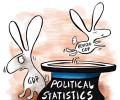
The SBI report, however, said the economic growth rate will pick up pace in 2020-21 to 6.2 per cent.

'It makes sense to have gold in one's portfolio keeping the political and economic risks of 2024 in mind.'

'Investors should hold equity assets for 3 to 5 years.'

Prime Minister Narendra Modi Wednesday said the International Monetary Fund (IMF) sees India as a "bright spot" in the global economy and as per the World Bank, India is in a better position to deal with the global headwinds than many other countries. This is because of India's strong "macroeconomic fundamentals", Modi said while virtually addressing the inaugural function of the 7th edition of Invest Madhya Pradesh-Global Investors Summit in Indore. In the past eight years, the government has increased the speed of reforms and removed many hurdles in the way of investments.

India should become a middle-income country and then push to make INR (rupee) a hard currency, and till then, it must promote the settlement of global trade in the local currency, think tank GTRI said on Sunday. Global Trade Research Initiative (GTRI) said that transforming a currency into a hard currency is a complex process that hinges on several pivotal factors. Firstly, economic stability is paramount; a country must exhibit low and stable inflation, consistent growth, and a balanced trade environment.

In the mid-quarter review on December 18, the Reserve Bank left key policy rates unchanged but said it will hike interest rates if inflation does not subside.

Indian equity markets had a good run in the first half of calendar year 2023 (CY23), with the S&P BSE Sensex and the National Stock Exchange Nifty50 hitting fresh 52-week highs. While the Sensex scaled up to a peak 64,718, the Nifty50 hit Mt 19,189. As the markets now prepare to enter the second half (H2) of CY23, all eyes are on global central banks, especially the US Federal Reserve, as to when they will pause and pivot as regards their interest-rate cycle.

India's exports contracted by 22 per cent, the steepest decline in the last three years, to $32.97 billion in June on account of global demand slowdown, especially in the Western markets like the US and Europe. According to the data of the commerce ministry, the trade deficit in June stood at $20.3 billion against $22.07 billion in the same month last year due to a fall in exports and imports. The inbound shipments during the month under review declined by a steep 17.48 per cent to $53.10 billion.
